Showing posts with label pain relief. Show all posts

Monday, December 10, 2012

Distractions Cut Pain

It is established that distracting mental activities can minimize perception of pain, but how this happens has not been well understood.  A study published in Current Biology online has found that it is related to a spinal process involving opioid neurotransmission.

A study of 20 men with an average age of 27 found that distraction not only takes the focus away from the pain, but can dampen the body’s initial physiological response to pain through endogenous opioids.
Painful levels of heat were administered to the subject while undergoing functional MRIs.  Those doing complex memory tasks were pre-occupied to the extent that they experienced 19% less pain than those doing simpler mental tasks.

“This phenomenon is not just a psychological phenomenon, but an active neuronal mechanism reducing the amount of pain signals ascending from the spinal cord to higher-order brain regions,” said lead author Christian Sprenger, of the University Medical Center Hamburg-Eppendorf in Hamburg, Germany.

Sprenger and his colleagues repeated the experiment with another group of 15 men, average age 25.  This time they administered naloxone to block opioid effect or saline solution.  Perception of pain was 40.5% greater for those with the difficult cognitive task when given the opioid antagonist naloxone. This provided the evidence that endogenous opioids play a role in the distraction phenomenon.

“Our findings strengthen the role of cognitive-behavioral therapeutic approaches in the treatment of pain diseases, as it could be extrapolated that these approaches might also have the potential to alter the underlying neurobiological mechanisms as early as in the spinal cord,” Sprenger and colleagues concluded.  

For more information see the May 17, 2012 online issue of Current Biology.


This article was originally published in Pathways Physician & Health Professional Bulletin - Issue 25.  To download this issue in PDF format, or past issues, visit our newsletter archives online at www.pathwayshealth.org/publications.

Monday, September 10, 2012

Romance Reduces Pain

New Love

The dizzy stage of early romantic love seems to reduce the sensation of physical pain.  So say the results of research at Stanford University School of Medicine.  The participants reported significantly lower levels of pain when looking at pictures of their beloved than when viewing photos of friends.

“Love engages very deep primitive reward systems that directly impact on our overall experience of pain,” says researcher Sean Mackey, whose team looked at the effects of romantic feelings on pain.


Fifteen students, aged 19-21, who were in the first nine months of a romantic relationship and described themselves as “intensely in love” were recruited for the experiment.  They were instructed to bring a photo of their sweetheart as well as one of a good-looking acquaintance of the same sex as the sweetheart.


While sitting in an MRI scanner to record their brain activity, the students held a block whose temperature could be controlled to cause high, moderate or no pain.  Their pain ratings were noted while focusing on the picture of their loved one, the acquaintance, and a word-puzzle distraction.


Both the photos of romantic partners and the distraction puzzle reduced pain by nearly identical amounts.  But the students had significantly less pain relief when looking at the photos of the attractive acquaintance.


Although the sweetheart photos and word puzzles both provided relief, they worked in different parts of the brain.  The part of the brain activated by love was the brain’s reward center which is also activated by chocolate and drugs like cocaine.


It turns out that the writers of all those romantic songs and poems were right—love truly is a powerful thing.


This article was originally published in Pathways & Partners - Issue 25.  To download this issue in PDF format, or past issues, visit our newsletter archives online at www.pathwayshealth.org/publications.

Monday, August 6, 2012

Power of Music

Music is a powerful force that can stimulate strong emotions within us.  Harnessing that power can benefit the seriously ill by improving their quality of life.  In a 3-year study Sandi Curtis, a music therapy professor at Concordia University in Montreal, Canada, divided university music therapy students and musicians in to pairs working with 371 participating terminally ill patients from 18 to 101 years old.  Participants were seen for a single music therapy sessions from 15 to 60 minutes long with the goal of enhancing pain relief, relaxation, mood and quality of life.

“Our study showed how music therapy was effective in enhancing pain relief, comfort, relaxation, mood, confidence, resilience, life quality and well-being in patients,” said Curtis.  The study was published in the journal Music and Medicine.

This article was originally published in Pathways Physician & Health Professional Bulletin - Issue 24.  To download this issue in PDF format, or past issues, visit our newsletter archives online at www.pathwayshealth.org/publications.

Monday, April 23, 2012

Hospice Care Guide - Questions & Answers - Part Two

Pathways will be sharing the answers to some of the most commonly asked questions regarding hospice care beginning with our last post on April 18th.   

Can we visit our own doctor?

Yes.  Your primary care doctor remains your doctor under hospice care.  Your doctor gives us direction about your care.

Will someone come to stay with us?

No.  Hospice does not provide shift care or 24-hour care.  Team members make visits. But a nurse is available by telephone 24-hours a day and can come at any time if a visit is necessary.

Do I have to give up my medications?  

No.  Hospice will pay for your medications that are related to the terminal diagnosis.  If there are medications that hospice does not cover, you can continue to get them and take them as you always have.

How will hospice manage pain if it occurs?  

Hospice usually treats pain aggressively.  We know that pain interferes with eating, sleeping, visiting and general quality of life. Uncontrolled pain can also shorten life.

The patient and family are always in control of their care and can decide how they want to treat pain.

Will my loved one be asleep all the time?   

Not usually.  Some diseases cause the patient to be less alert.  If pain is severe, pain medicine may make a patient sleepier than usual for two or three days, then they will be as alert as the disease lets them be.

Does hospice do anything that will make my life shorter or longer?    

No.  Hospice tries to improve life in the final months or weeks, but does not try to shorten or lengthen life.  Research shows that with the extra care from hospice people who go on hospice usually live longer than those who do not.

What about help with practical things like grocery shopping?   

You can have a volunteer if you like.  Volunteers can help you with practical matters such as shopping, or they can stay with your loved one while you go out.

What if caring for my loved one at home becomes too much for me to do?    

If you feel you cannot continue caring for the patient at home, the hospice social worker can assist you to find a skilled nursing facility or residential care facility.


Be sure to check back in with us next week for the next part of our blog series on commonly asked hospice questions and answers.  

At the end of the blog series we will post a downloadable PDF with all of the questions and answers covered in this blog.

Monday, March 19, 2012

Music Can Mean Less Pain

Focusing on music can distract people who have significant anxiety about pain enough that they feel the pain less acutely, according to a recent study done at the University of Utah Pain Research Center.  The study found that pain was reduced as the demands of focusing on the task rose.

Researchers had 153 volunteers concentrate on following a melody so they could identify the tones that stood out.  During the session small pain shocks were administered through fingertip electrodes.  The authors explained that the effects of the music resulted from competition with the participants’ pain pathways.

Interestingly, those who had registered the most anxiety about pain became more absorbed in the task and were more likely to experience reduced perception of pain.  The study authors suggested that, “Clinicians should consider patients’ personality characteristics when recommending behavioral interventions like music listening for pain relief.”

Pathways has volunteers that can provide music sessions to our hospice patients as part of our Integrative Therapies program of care for body and soul.

The results were published in the December, 2011 issue of the Journal of Pain.

Thursday, July 28, 2011

Hindus & Hospice

Many Hindu beliefs align with hospice and palliative care goals.  A senior research specialist at the City of Hope in Duarte explored the Hindu concepts of suffering, karma and reincarnation in a recent article in the Journal of Hospice and Palliative Nursing.

Susan Thrane, MSN, RN, OCN, explained that among other similarities, Hindus often believe that death should neither be sought or prolonged, values that reflect the hospice philosophy.  However, they do sometimes believe that physical suffering is beneficial in that it can lead to spiritual growth, perhaps resulting in a better birth in a future life.

Although palliative and hospice care usually seeks to relieve pain and suffering, it also seeks to help individuals meet their personal goals, and sensitive to cultural beliefs.

Thrane found that Hindus tend to be family oriented, and may often defer health care decisions to the oldest son. 

There are an estimated 2.3 million Hindus in the US.

Tuesday, July 26, 2011

Power of Positive Thinking

A series of lab experiments conducted in Europe found that those patients who expect their analgesics to work get relief from their pain.  Those who were told their painkillers had been discontinued had more pain, even though they were actually continuing to receive the same dose. A patient’s expectations about the effectiveness of a pain drug appear to override the properties of the drug itself.

Scans Illustrate Phenomenon


Patient MRI scans conducted during the research show that, “volunteers had more activity in areas of the brain involved in memory and anxiety when they were expecting pain versus when they were expecting relief.  When the volunteers were told the drug would work, there was a boost in brain activity in areas associated with fighting pain,” says study author Dr. Ulrike Bingel, from the department of neurology at the University of Hamburg Medical Center in Germany.

Although the placebo effect is well documented, there is less research on the “nocebo” effect, in which patients have negative experiences when warned about the side effects or lack of effectiveness of a treatment, even if they are taking a placebo.

“This tells me that when we’re talking to patients and presenting therapy, the more positive we are about how the therapy is going to impact them, the better outcomes we’re going to have,” says Carla Rubingh, a pain management specialist and assistant professor of pharmacy practice at the University of Nebraska Medical Center in Omaha who was not involved in the study. 


Benefits of the Mind-Body Connection

Pathways is home to an innovative Integrative Therapies Program that includes guided imagery and meditation to help patients find comfort and relief.  Relaxation techniques use the mind-body connection to achieve relaxation. Using simple suggestions, the practitioner guides the patient or family member to make the changes they wish to achieve in their physical or emotional state. This is very effective in reducing stress and anxiety, and is helpful in pain management.

For more information about Integrative Therapies at Pathways visit our website and Integrative Therapies resource page for caregivers

Friday, July 9, 2010

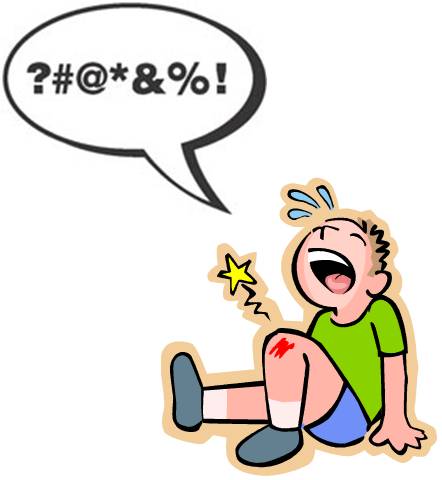
Swearing Makes Pain More Tolerable


Uttering a curse word when you stub your toe or hit your thumb with a hammer could actually make it easier to bear the pain. Swearing is a common response to pain, but until now there has been no research looking into this. 

"Swearing has been around for centuries and is an almost universal human linguistic phenomenon," said Richard Stephens of Keele University in England, and one of the authors of the study.

Stephen’s team thought swearing would exaggerate the pain and people would tolerate it less.  The opposite turned out to be true.

The researchers had 64 university students put their hands in a tub of ice water for as long as possible while repeating a swear word of their choice.  The experiment was then repeated with the volunteers repeating a more common word that they would use to describe a table.

Contrary to what the researchers expected, the volunteers kept their hands submerged longer while repeating the swear word.

A Primal Response

Stephens says that swearing comes from deep-seated, primal, emotional brain centers.  Just as a cat would screech if his tail as stepped on, a primate would make a noise, and in humans our language ability often transforms the screech into a swear word. 

The researchers think that the increase in pain tolerance occurs because swearing triggers the body's natural "fight-or-flight" response. Stephens and his colleagues suggest that swearing may increase aggression (seen in accelerated heart rates), which downplays weakness to appear stronger.

"Our research shows one potential reason why swearing developed and why it persists," Stephens said.

The results of the study are detailed in the Aug. 5, 2009 issue of the journal NeuroReport. This article is adapted from the Live Science website.

For more information about Pathways Home Health, Hospice & Private Duty please visit our website at www.pathwayshealth.org.

ShareThis